

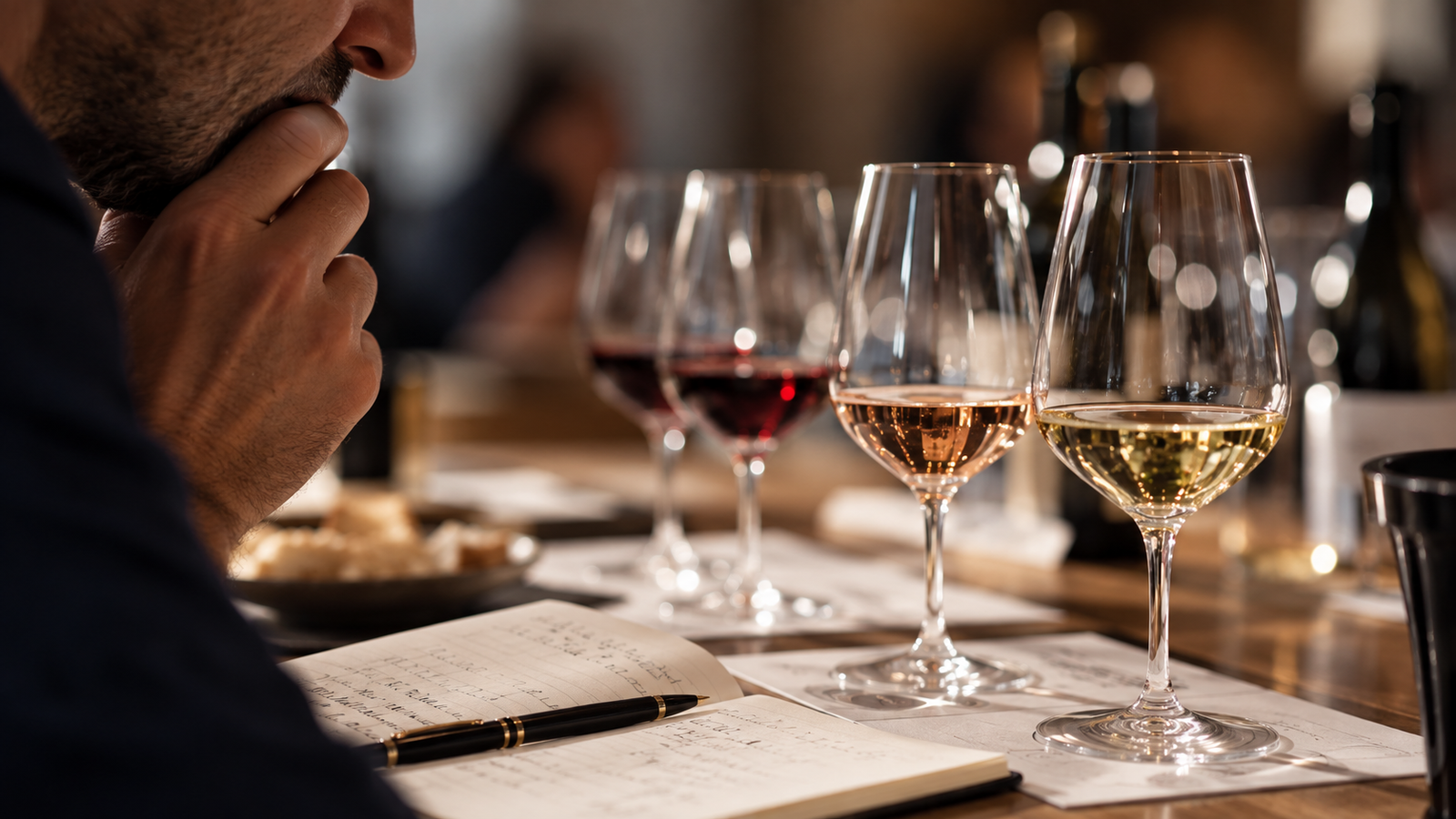
For more than twelve years, wine was part of my professional life. As Sales Director at Castell d’Encus and Ferrer Bobet, I had the privilege of representing two projects I deeply admire—traveling across our region, visiting restaurants and shops, taking part in fairs, and sharing many bottles with clients, sommeliers, distributors, and friends.
However, when you work commercially with wine, it’s hard to fully separate the bottle from everything around it. Alongside the landscape, the grape variety, the vintage, or the emotion it can convey, there are also commercial targets, distribution channels, market positioning, price lists, sales, and results. Even when you taste a wine you like, part of your mind is already thinking who you could introduce it to, which wine list it might fit on, or what argument would help explain it better.
I’m not saying this as a criticism. Selling wine has given me some of the best moments of my professional career. It has allowed me to meet extraordinary people, understand the effort behind every bottle, and discover that marketing a wine also means taking on the responsibility of representing a team’s work and the identity of a place.
But when wine stops being your job, does something change?
Now I choose bottles with more freedom. I no longer need to justify every choice or think about whether a wine follows a trend, whether it sits in a certain price bracket and how it compares to the wines I used to sell, or whether it fits a commercial narrative. I can choose it out of curiosity, because I’m drawn to a grape variety I don’t know well, because I trust the person who made it, or simply because I think it will pair well with that moment or that meal—and with the people I’ll share it with.
I’ve also learned to value wines that have something to say. I’m not necessarily looking for technical perfection or the bottle most celebrated by wine gurus. I still like precision, elegance, and subtlety, of course, but today I place more importance on identity, honesty, and that small imperfection that sometimes turns a wine into a memorable experience. There are flawless wines you soon forget, and others that, without being perfect, make you think again about the place, the vintage, or the person you shared them with.
As a winelover and a tasting host, I still enjoy talking about wine. But I try to do it in a different way. Over the years I’ve understood that sharing knowledge shouldn’t be about showing everything we know, but about helping others enjoy the living matter in their glass more. The language of wine can be precise without feeling distant or pedantic. You don’t need to identify every aroma in a wine or master specialized vocabulary to be moved by a glass. Sometimes it’s enough to ask ourselves whether we like it, how it makes us feel, and who we’d like to share it with.
That’s probably what’s left of wine when you no longer have to sell it: curiosity; the landscape it comes from; the people who made it; and the pleasure of discovering. The ritual of opening a bottle with no expectation other than having a good time. The conversation that grows around it, and the memory it leaves when the glass is already empty.
And what remains, above all, is the freedom to come back to it without haste or pressure, without goals and without having to convince anyone. Just the desire to keep learning and to let, from time to time, a bottle surprise you.
I sell less wine now than I used to. But I’m convinced I’m listening to it in a different way.